The product is there.
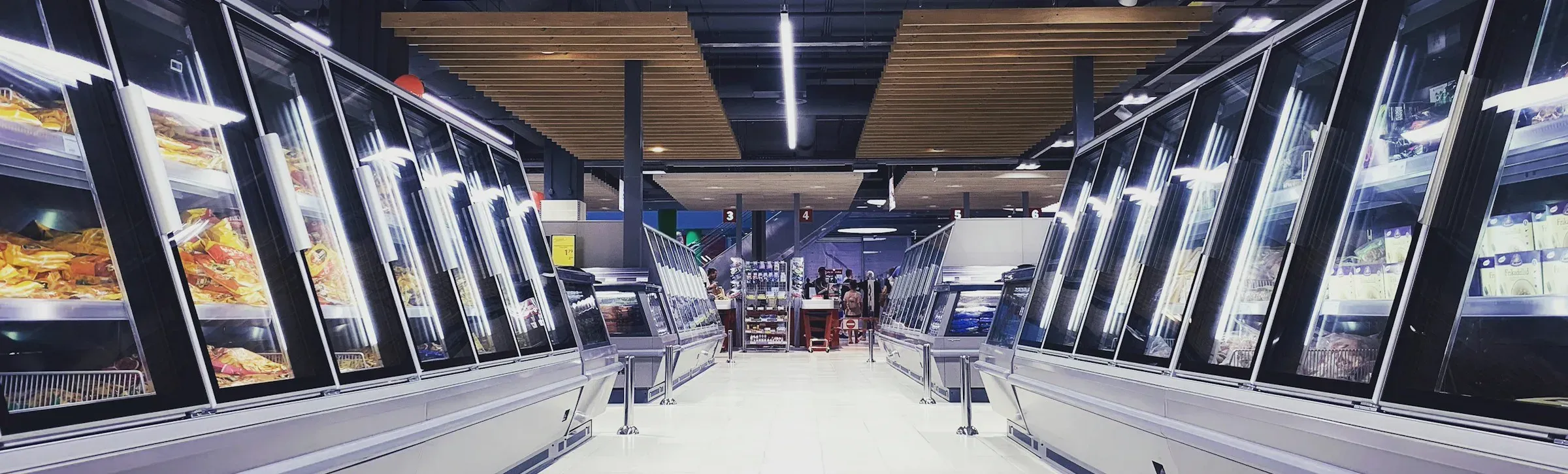
It is in the warehouse, on the website and on a supermarket shelf. It has good reviews. A good price. Its packaging is made from recycled materials and the brand works with local suppliers.
Then someone asks their AI agent to find three sustainable products, available for immediate delivery and suited to their budget.
That product does not show up.
Nobody rejected it. The person never saw it. The agent did not conclude it was a bad option either. It simply did not find a clear enough way to verify what made it valuable.
The power is, now and always, before the last click

When we think about an AI buying on our behalf, we picture the final moment: an agent that selects an excellent product, authorizes the payment and places the order. It is the most spectacular scene of the future and, for now, the least important one.
A Gartner survey found that barely 11% of consumers would allow an AI to make the final decision, even in low-risk categories. But 31% accept an AI recommending their product options.
People still want to keep the last click, and they seem far more willing to hand over everything that happens before it. The searching, comparing and discarding — that is, determining which information is trustworthy enough to make the final decision.
We keep the feeling of choosing because we are still the ones pressing “buy”.
An agent does not need to make the final decision to become the most influential actor in the process. Controlling the shortlist is enough.
That shifts a key question brands have to ask themselves. It is no longer only about how to be chosen, but how to avoid being eliminated from those algorithmic recommendations.
A shelf nobody can see

For years, brands have been fighting over centimeters. A product’s height, its position in the store, packaging design and many other factors that can change its fate.
Now another competitive space appears. Google Cloud calls it the invisible shelf: the environment where artificial intelligence agents search, interpret and compare products on behalf of a consumer.
It has no aisles and no end caps. It is not limited by physical space either. But it does have one constraint: products have to be understandable by a machine.
On that shelf, data works as a second form of packaging.
If a product uses sustainable materials but that attribute is not structured and labeled, an agent searching for “verified sustainable packaging” might not find it.
On the physical shelf, packaging needs to attract attention. On the invisible one, the product needs to produce evidence. That turns seemingly administrative tasks — catalogs, taxonomies, specifications, certifications, return policies, availability and provenance — into new expressions of the brand.
Information has a place of origin too
It might seem that the invisible shelf will be more neutral than the physical one. It does not get tired, it does not place an advertiser’s product at eye level and, in theory, it can compare thousands of alternatives with the same patience. But models do not start from a cultural vacuum. In 2026, researchers from Universidad del País Vasco and Cardiff University put 31,680 cultural questions in 24 languages to eight language models. The questions covered topics such as food, education, traditions and community life, but did not specify a region.
When the models had to choose a foreign cultural reference, Japan was the dominant option in six of the eight systems. The United States also appeared disproportionately. The researchers further found that the processes used to turn base models into “helpful” assistants tended to concentrate their references in a narrower group of countries.
The study did not examine purchases. It does not prove that an assistant automatically recommends a Japanese or American brand over a Mexican one. But it does show that the machines in charge of organizing information have internal geographies: some examples, countries and ways of understanding the world are more available than others.
An answer written in Spanish does not guarantee a Latin American perspective.
That is the cultural problem hidden inside the invisible shelf. If the machine learns what “trustworthy”, “sophisticated”, “healthy” or “sustainable” means from a handful of dominant cultures, it will not only sort products. It will also establish which ways of producing value count as the norm.
A sauce may hold a recipe passed down for generations. A financial company may have built trust through community relationships. A food brand may understand family habits that rarely appear in global studies.
Which box does a tradition go in?
How do you label belonging?
In which catalog field do we put humor, roots or memory?
The machine does not necessarily reject those values. Something quieter can happen: it may have nowhere to put them.
Every taxonomy is a theory of the world
Classifying looks like a technical activity. It is really a philosophical decision.
A taxonomy establishes which differences matter. It determines what can be compared, what can be measured and what has to be left out. It is a theory of the world hidden inside a spreadsheet. Price, weight, availability and delivery time fit easily. Trust, ritual, identity and cultural context are far more complex. How do we learn to translate them without destroying them?
A brand that stays entirely human may turn out to be invisible to agents. One that optimizes entirely for them runs a different risk: becoming an efficient, predictable, interchangeable spec sheet. That will be one of the central tensions of the future of marketing: how to design a brand that is legible to machines and desirable to people.
Machines need precision. People respond to ambiguities, contradictions, symbols, memories and emotions that cannot always be reduced to a classification. Machines look for consistency. Cultures produce exceptions. Machines need to know what makes a product different. People want to know what that product says about them.
The answer will be to build a brand with two forms of expression connected to each other. And between them, a third capability is required: translating meaning into evidence without turning difference into a set of generic labels.
A brand no longer controls its own presentation

The challenge does not belong exclusively to the marketing department either. When an agent researches a brand, it can look at the product page, the reviews, the corporate reports, the media coverage, the availability and the historical price behavior. It can find a brilliant promise in the advertising and a different reality in the returns. The brand the machine interprets is the combined result of communication, technology, operations, service, data and, above all, what employees, media and advertising say about it. No campaign can single-handedly correct a contradiction distributed across that whole system.
Companies will have to ask themselves questions that used to seem too technical for brand building: What does an agent understand when it researches our product? What important information does it fail to find? Which sources does it use to verify our claims? Does our brand appear the same way in Mexico, Brazil and the United States? How much of our cultural value is lost when the system tries to compare us?
This is not simply about filling the internet with content designed to appear in AI-generated answers. If every brand uses the same words, structures and optimization formulas, the result will be a perfectly legible and completely indistinguishable shelf.
The advantage will belong to the companies that manage to make their difference verifiable without making it generic.
The product is still there
Let us go back to the product from the beginning. It is still in the warehouse. Still on the manufacturer’s website and on the supermarket shelf. A person could find it, read its story and decide it is exactly what they were looking for.
But that person already asked for help. Their agent reviewed the market, selected three alternatives and built a reality small enough to make choosing easy.
The arrival of the non-human consumer forces us to revisit a fundamental idea: choosing is not only about making a decision. It also depends on who organizes the available possibilities.
In agentic commerce, that is a capability shared by assistants, models, platforms, e-commerce and recommendation systems. Each one will contribute criteria, interests and biases to a reality the consumer receives already sorted. That is why the next great competition between brands will not only be for attention, preference or conversion. It will be for the right to be part of what a machine considers possible.
The future demands brands clear enough to be understood by machines and singular enough to keep meaning something to people.
Your next consumer is not human, and that does not mean your brand should stop being human.